OWACDO has completed a three-day capacity-building programme for Social Register Action Teams in Benue, equipping community volunteers to support a more inclusive, transparent and responsive National Social Register process.
The training took place in Makurdi from 10–12 August 2026 under the European Union Support for Strengthening Social Protection in Nigeria (ESSPIN) project. It was delivered with ActionAid Nigeria and representatives of the State Operations Coordinating Unit (SOCU), with funding from the European Union.
Who are the Social Register Action Teams?
Social Register Action Teams, commonly called SoRATs, are community-based volunteers drawn from existing structures at local-government level. Because they are familiar with their communities, they can serve as an important link between citizens and public institutions.
The first phase targets 7,100 households and approximately 31,500 individuals across seven local government areas. Reaching that scale requires more than data-collection tools. It requires community trust, careful mobilisation, accurate records and continued attention to people who may otherwise be excluded.
Day one: accurate data and community mobilisation
The opening sessions introduced the purpose of the National Social Register and the role of SoRATs in identifying poor and vulnerable households. Participants examined data-collection responsibilities, grassroots mobilisation and the importance of encouraging eligible community members to obtain National Identification Numbers needed for registration.
OWACDO’s Executive Director encouraged participants to apply their learning in ways that support inclusion, transparency and accountability. Facilitators also stressed that good mobilisation is a continuous process of listening, explaining and building confidence—not a one-time announcement.
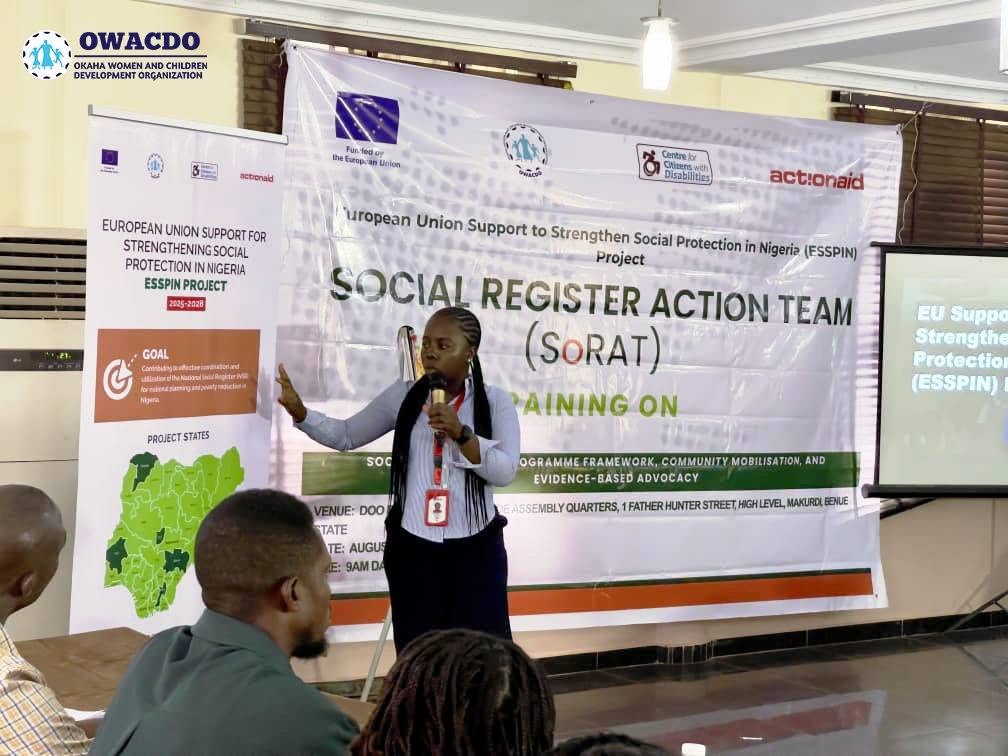
SoRAT members begin three days of practical preparation for community-level social-register work.
Day two: inclusion, evidence and responsible reporting
The second day examined the gender dimensions of poverty and the barriers that can prevent vulnerable groups from accessing social-protection programmes. Sessions on Gender Equality, Disability and Social Inclusion helped participants consider how power, location, disability and social norms can affect who is seen, heard and registered.
Through group exercises on evidence-based advocacy, participants identified key decision-makers and explored ways to represent marginalised people effectively. Monitoring and reporting sessions introduced project tools and the steps required to gather quality data before reporting through KoboCollect.
OWACDO Programme Manager Queen Ameh emphasised that social protection can reduce poverty and inequality, promote dignity, improve health and help households cope with sudden shocks.
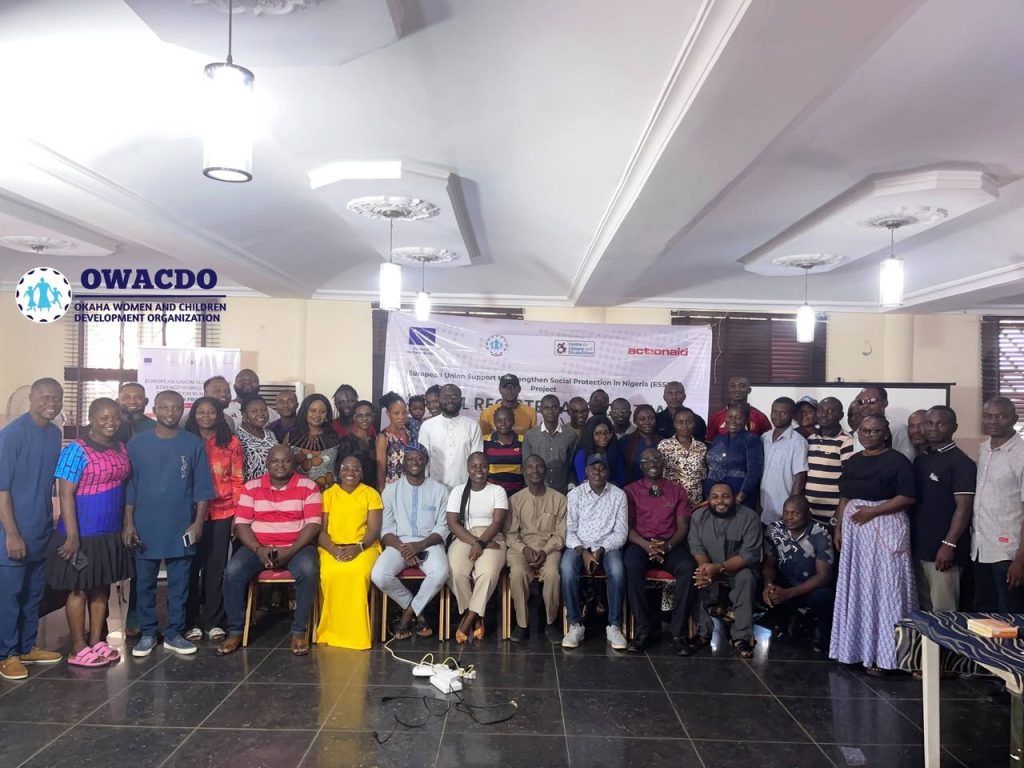
Group work helped participants apply inclusion, advocacy, monitoring and reporting concepts to field situations.
Day three: community scorecards and field plans
The final day focused on practical community-engagement tools. Participants learned how community scorecards and other participatory methods can help residents express priorities, review service delivery and contribute evidence for advocacy.
Teams then developed implementation strategies and clarified their field roles and responsibilities. This planning stage connected the training content to the work ahead, giving each team a clearer route from mobilisation and enrolment support to monitoring and community feedback.
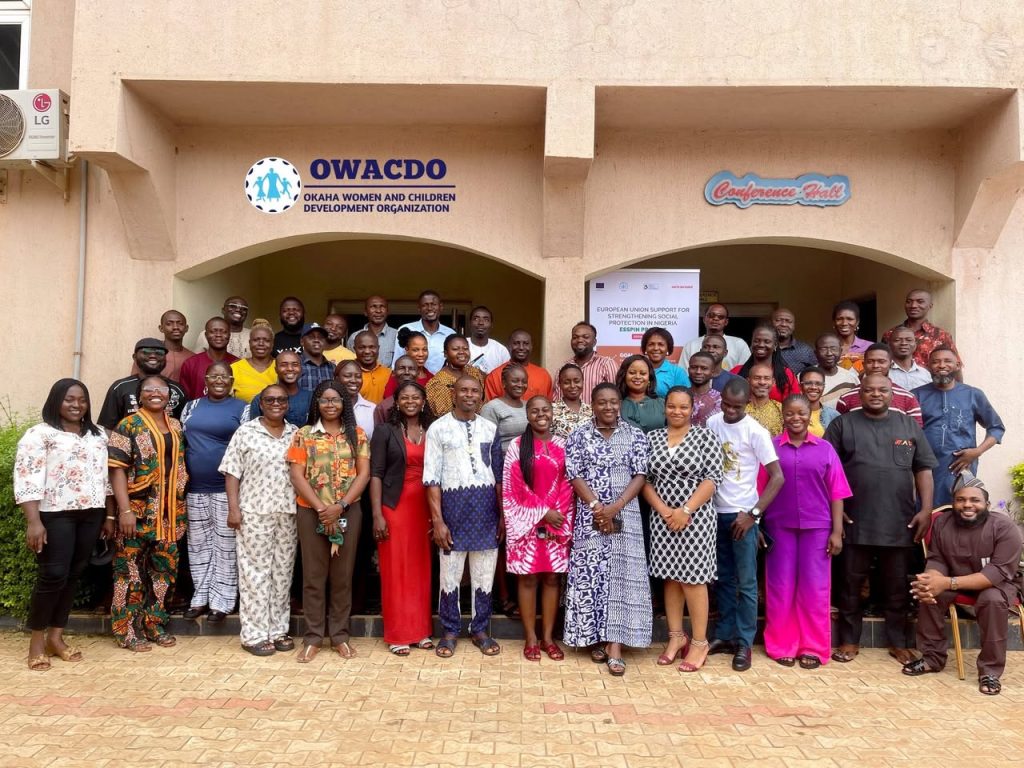
The training concluded with practical plans for mobilisation, monitoring and citizen-led accountability.
Strengthening trust in social protection
The value of the Social Register depends on whether it reflects the people most in need and whether communities trust the process. Equipped SoRAT members can help explain enrolment requirements, identify barriers, document concerns and promote citizen-led monitoring.
The programme also demonstrates the importance of partnership between communities, civil society, government structures and development partners. Learn more about ActionAid Nigeria and its work to advance inclusive development.
For OWACDO, the conclusion of the training marks the beginning of the field phase. The organisation will continue supporting teams as they work to ensure that vulnerable people are informed, included and represented in Benue’s social-protection system.