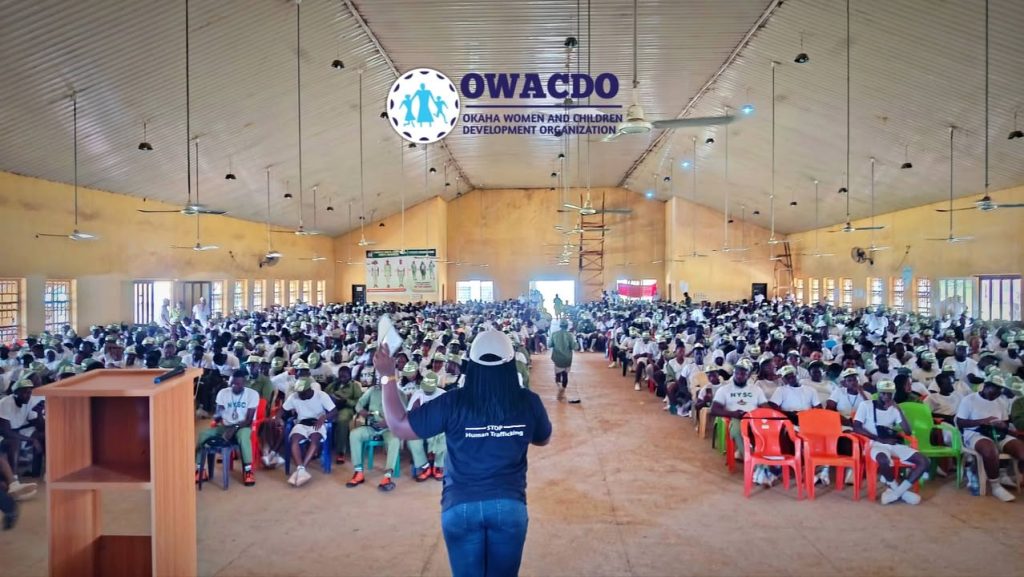
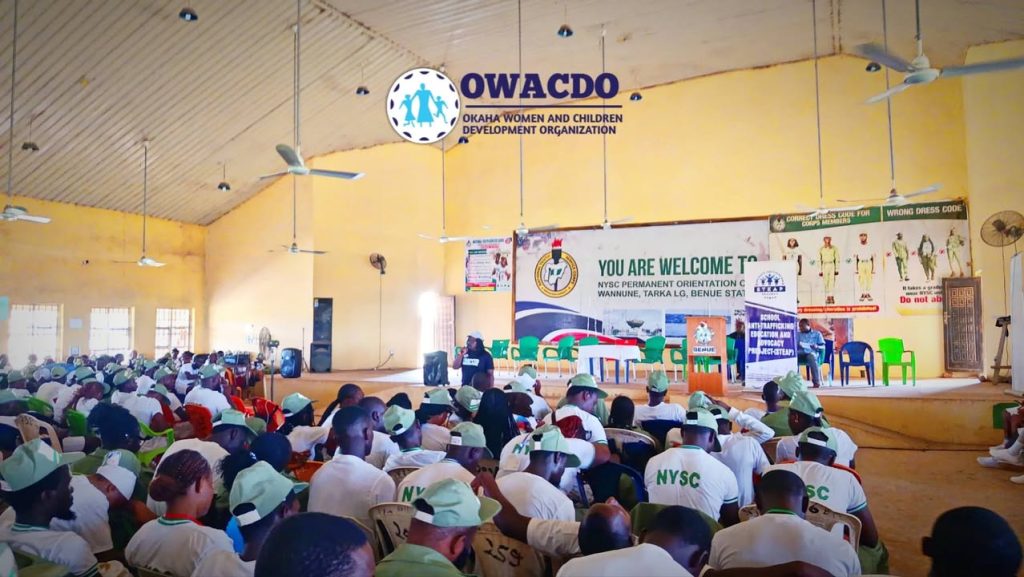
More than 2,500 National Youth Service Corps members have received anti-trafficking education from OWACDO at the NYSC Orientation Camp in Wanune, Benue State.
The sensitisation session examined current patterns of human trafficking, the consequences for victims and communities, and the practical role young adults can play in preventing exploitation and protecting vulnerable people.
Why corps members are important anti-trafficking allies
NYSC corps members live, work and volunteer across different parts of Nigeria. During their service year, many become teachers, health workers, community-development volunteers and trusted sources of information. Their reach makes them valuable partners in recognising suspicious recruitment, correcting misinformation and encouraging timely reporting.
The Wanune session treated corps members not simply as an audience, but as potential community advocates. Understanding how trafficking works can help them protect themselves, support peers and share useful information in their places of primary assignment.
Recognising modern trafficking patterns
Human trafficking does not always begin with physical force. It may begin with deceptive promises of jobs, education, travel or financial opportunity. Traffickers can exploit economic hardship, limited information and the trust people place in recruiters or acquaintances.
Participants explored these changing patterns and the consequences for victims, including loss of freedom, violence, forced labour, sexual exploitation and long-term emotional and economic harm. The discussion emphasised the need to question offers that appear unsafe, verify information and pay attention when vulnerable people are being moved or controlled under suspicious circumstances.
Corps members learned how deception, vulnerability and unsafe recruitment can lead to exploitation.
From awareness to prevention and reporting
Information becomes protective when people know how to act on it. The session encouraged corps members to discuss trafficking responsibly, avoid blaming victims and report credible concerns through appropriate authorities.
Prevention also involves challenging the conditions traffickers exploit. Communities are safer when young people can verify opportunities, families can recognise warning signs and victims can seek help without shame. Corps members can contribute by sharing accurate information and connecting vulnerable people with recognised support structures.
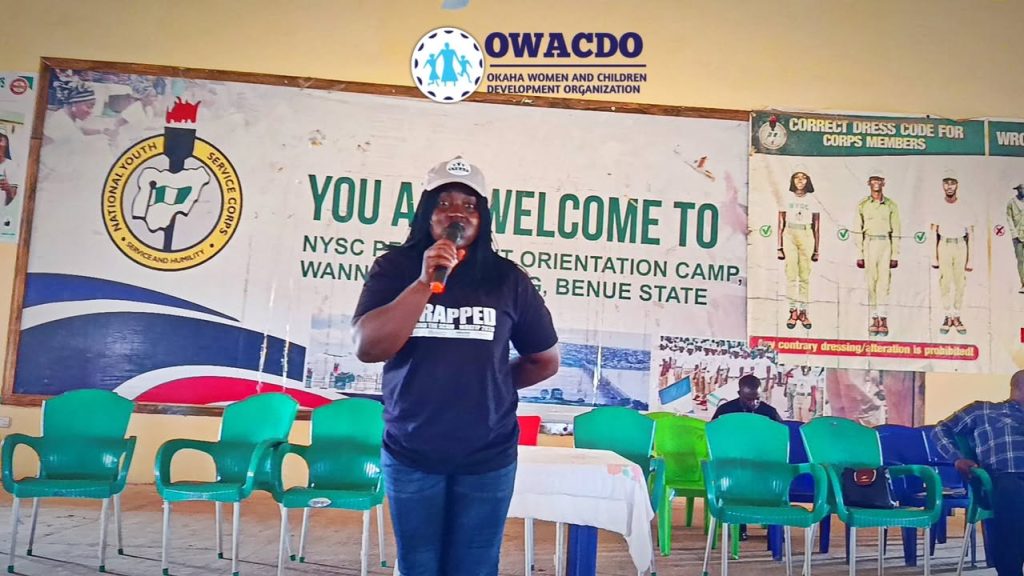
OWACDO’s facilitator turns awareness into practical guidance on prevention and responsible reporting.
Part of OWACDO’s wider STEAP engagement
The Wanune activity was implemented under the School Anti-Trafficking Education and Advocacy Project (STEAP), funded by the Kingdom of the Netherlands and implemented by the International Centre for Migration Policy Development in collaboration with the National Agency for the Prohibition of Trafficking in Persons.
Reaching more than 2,500 corps members creates the potential for information to travel far beyond the orientation camp. Each participant can carry the lessons into schools, workplaces, host communities and personal networks during and after the service year.
OWACDO will continue using community education and strategic partnerships to strengthen awareness, support prevention and promote a society in which vulnerable people are better protected from trafficking and exploitation.