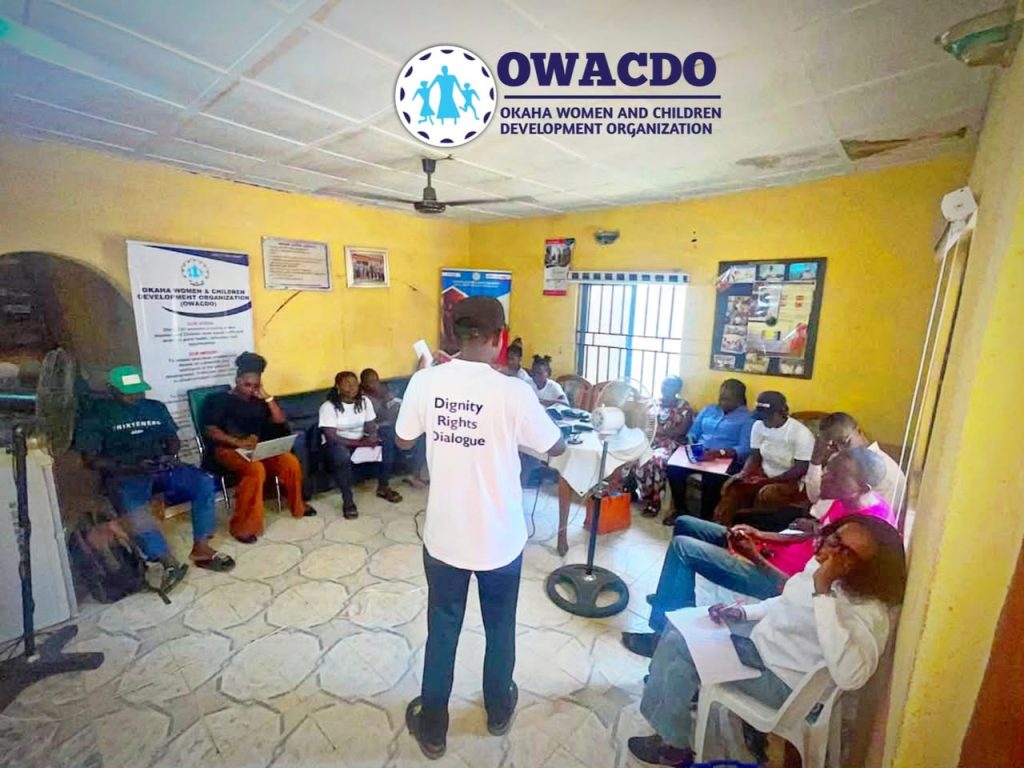
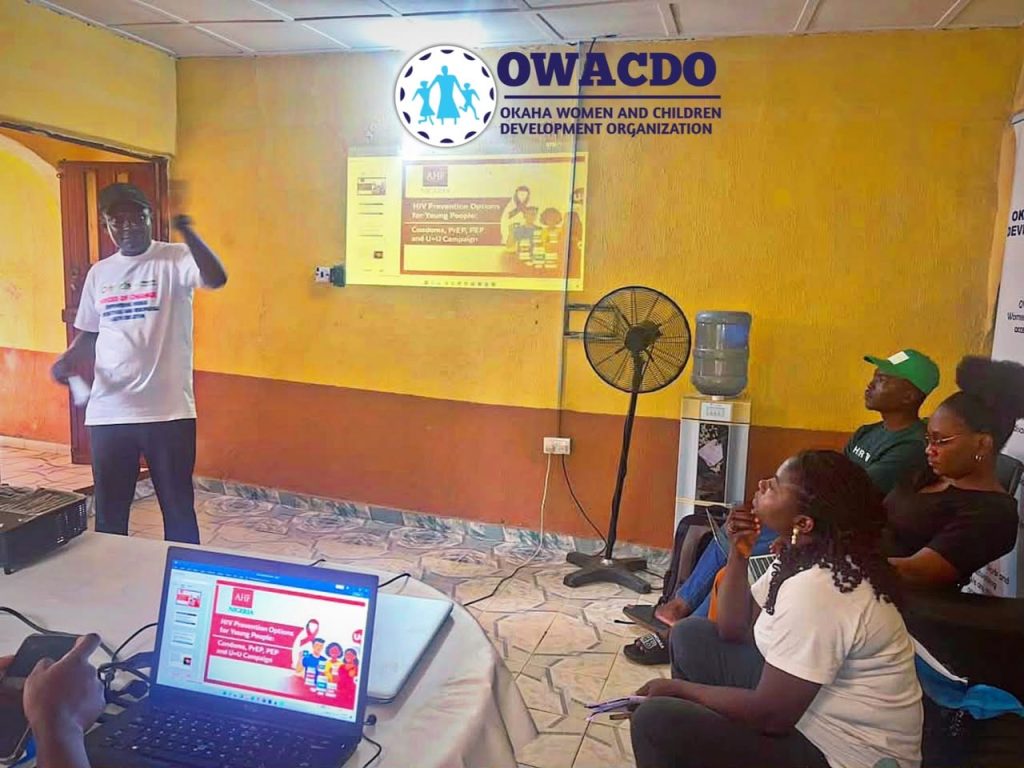
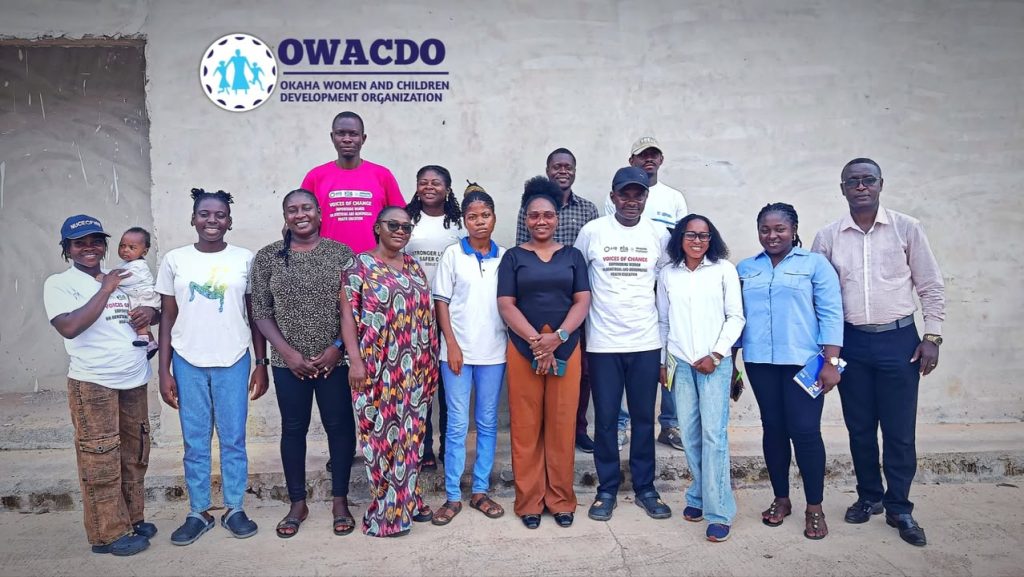
HIV prevention for young people was the focus of an OWACDO staff capacity-building session held on Wednesday, 26 August 2026, at the organisation’s office in Makurdi, Benue State.
Facilitated by Mr. Ben, the interactive session strengthened staff members’ understanding of current HIV-prevention options and prepared them to share accurate, practical and stigma-free information with young people and the wider community.
Why informed staff matter in HIV prevention
Young people often receive conflicting information about HIV from friends, social media and other informal sources. Development workers who engage them therefore need clear knowledge, respectful communication skills and the confidence to correct misinformation.
The training helped OWACDO staff connect technical information with the realities young people face. It reinforced that effective prevention is not only about listing risks; it is also about enabling people to understand their options, seek appropriate services and make informed decisions without fear or judgement.
Understanding the available prevention options
Participants discussed several recognised HIV-prevention approaches:
Condoms, when used correctly and consistently, reduce the risk of sexual transmission of HIV and other sexually transmitted infections.
Pre-exposure prophylaxis (PrEP) is medicine taken by an HIV-negative person who may have a substantial risk of exposure.
Post-exposure prophylaxis (PEP) is an emergency course of HIV medicine that must be started promptly after a possible exposure under the guidance of a qualified health professional.
U=U—Undetectable equals Untransmittable—means that a person living with HIV who takes treatment and maintains an undetectable viral load does not sexually transmit HIV.
These options work best alongside reliable testing, professional guidance and access to appropriate health services. Readers can learn more from the World Health Organization’s HIV fact sheet.
OWACDO staff explore practical HIV-prevention options during the capacity-building session.
Testing, treatment adherence and stigma reduction
The discussion extended beyond transmission to HIV testing, treatment adherence and the damaging effects of stigma. Knowing one’s status is an important entry point to either prevention support or timely treatment. For people already receiving HIV treatment, adherence supports health and helps achieve viral suppression.
Stigma can discourage people from testing, asking questions or continuing care. The session therefore emphasised language that respects dignity and avoids blame. Staff considered how to answer sensitive questions, correct myths and refer people to appropriate services without exposing them to embarrassment or discrimination.
The interactive format allowed staff to ask questions and connect technical knowledge with community realities.
Turning staff learning into healthier communities
For OWACDO, internal capacity building is part of responsible programme delivery. Staff members who understand prevention options can communicate more clearly, challenge harmful myths and help young people recognise when and where to seek professional support.
The session also strengthened the organisation’s readiness to integrate accurate HIV information into community engagement. By investing in its team, OWACDO is helping ensure that future health conversations are evidence-informed, practical and centred on the rights and dignity of every participant.