
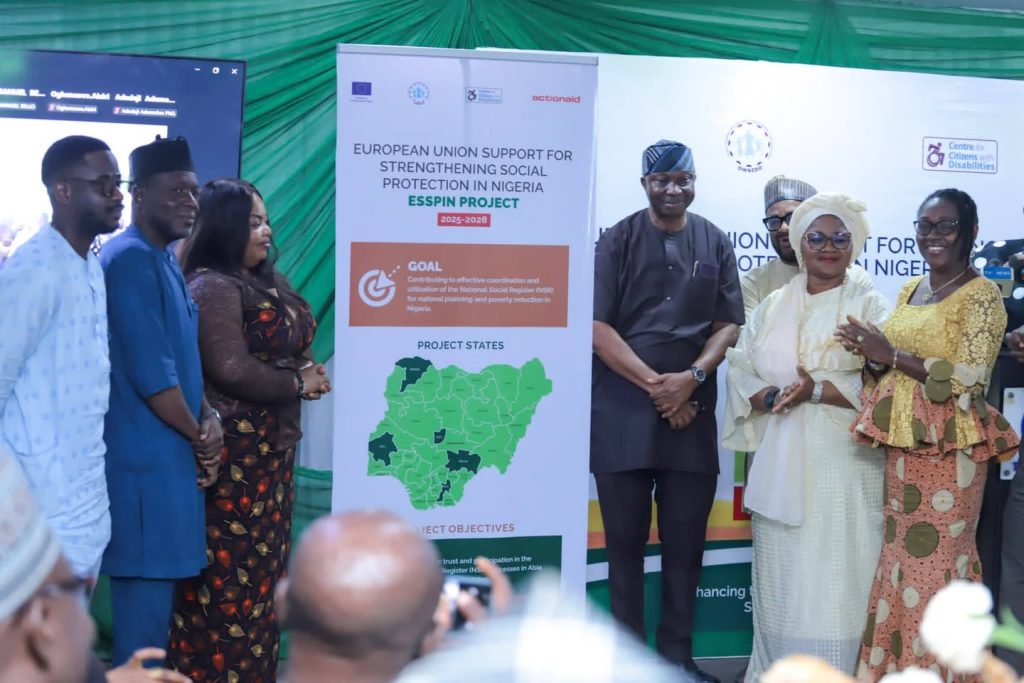
The ESSPIN project in Nigeria has officially launched, bringing together civil society, government institutions and development partners to strengthen social-protection systems for vulnerable people.
OWACDO celebrated the launch with ActionAid Nigeria and the Centre for Citizens with Disabilities (CCD). The European Union-funded initiative—European Union Support for Strengthening Social Protection in Nigeria—places inclusion and coordinated action at the centre of its work.
A broad partnership for stronger social protection
The launch convened representatives of the European Union, UNICEF, the International Labour Organisation, the Federal Ministry of Budget and Economic Planning, the Federal Ministry of Women Affairs, State Operations Coordinating Units, the National Social Safety Nets Coordinating Office and other stakeholders.
This range of institutions reflects the complexity of social protection. Reaching people effectively requires accurate data, inclusive policy, community trust, coordinated services and mechanisms that respond to the realities of women, children, persons with disabilities and households facing poverty or displacement.
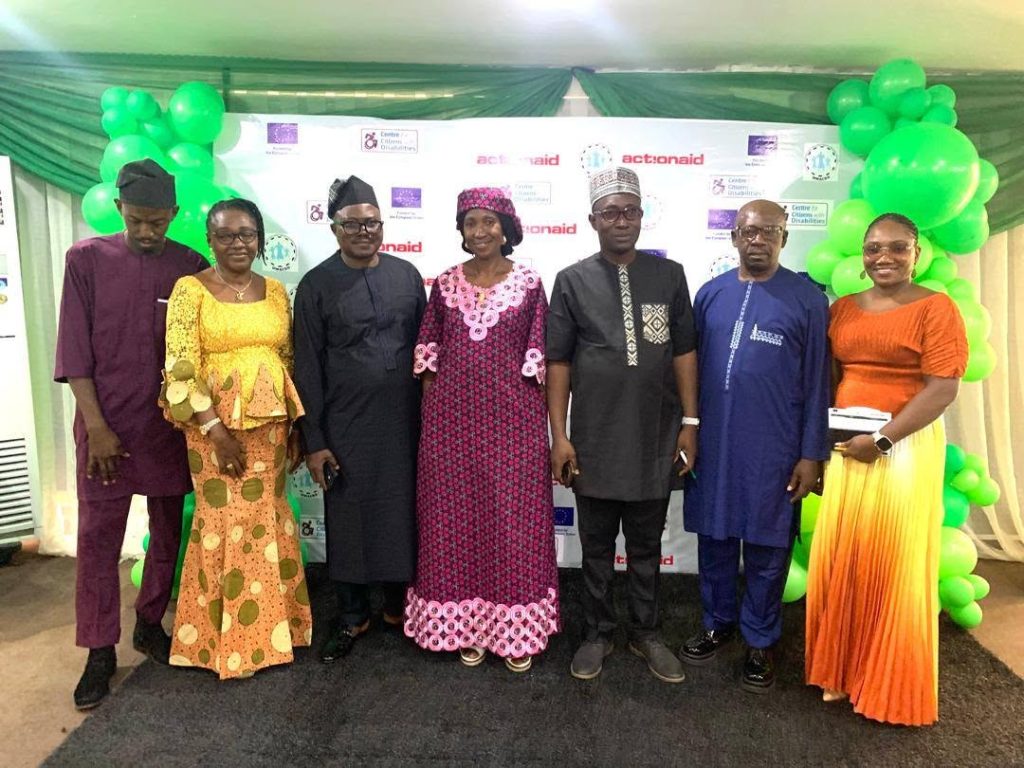
OWACDO’s community role in ESSPIN
OWACDO’s contribution connects national ambitions with community realities. Its work includes engagement with leaders and residents, clear information about social-protection processes and support for the participation of vulnerable households.
That community role also creates space for feedback and accountability. People need to understand what a programme can and cannot provide, how to prepare for registration processes and where to raise concerns. Trusted local engagement helps reduce misinformation and exclusion.
From launch to people-centred implementation
The official launch marked the beginning of a shared implementation journey. For OWACDO, it reinforced a commitment to inclusion, sustainable development and partnerships that place people—rather than systems alone—at the centre of social protection.
As ESSPIN moves forward, continued coordination between communities, civil society and public institutions will be essential. The goal is a stronger system that can identify vulnerability more fairly and connect people with appropriate support.