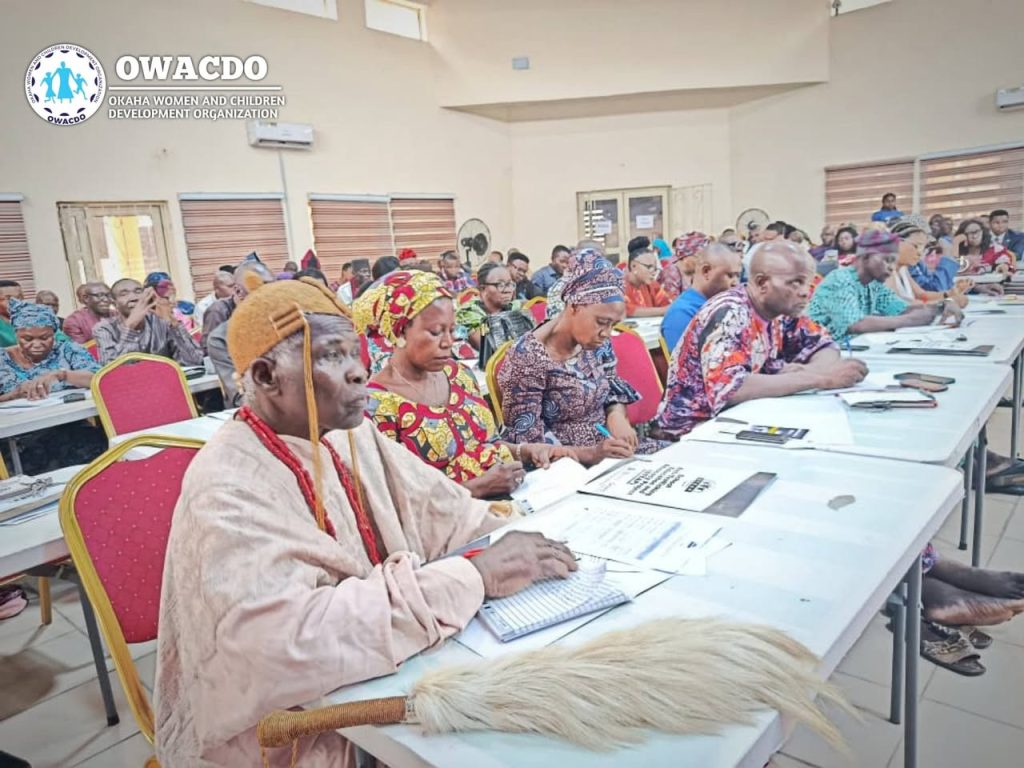
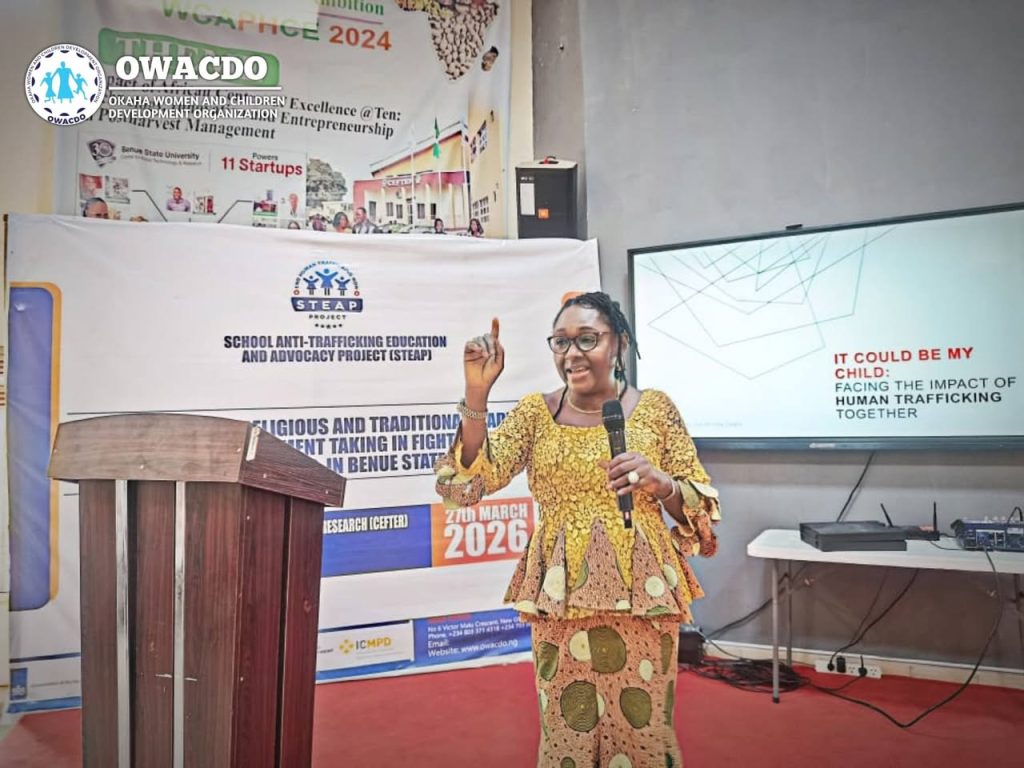
More than 180 Benue leaders against human trafficking gathered in Makurdi on 27 March 2026 for a one-day OWACDO training focused on trafficking in persons and violence against persons.
The activity was delivered under the School Anti-Trafficking Education and Advocacy Project (STEAP), funded by the Kingdom of the Netherlands and implemented by the International Centre for Migration Policy Development (ICMPD) in partnership with OWACDO.
Unity across faiths and communities
Participants included leaders from Catholic, Pentecostal, Orthodox and Muslim communities, alongside representatives of Tiv, Idoma, Igede, Igbo, Yoruba and Hausa groups. The diversity of the room demonstrated a shared understanding that traffickers exploit vulnerability across religious and ethnic boundaries.
Traditional and religious leaders are often among the first people families approach for advice. Equipping them with accurate information can help communities recognise risks sooner and respond through appropriate protection and reporting channels.
Participants committed to take prevention messages into their communities and institutions.
Recognising drivers, victims and emerging trends
The training explored common drivers of trafficking, ways to identify possible victims and the importance of reporting concerns through proper channels. Participants also considered emerging trends, including the exploitation of children through fraudulent or abusive orphanage arrangements.
Discussion connected individual harm with wider consequences for community safety and national development. Trafficking can fracture families, deepen poverty and expose survivors to violence, coercion and lasting trauma.
A pledge to turn knowledge into prevention
The day concluded with a collective pledge: participants would raise awareness, challenge deceptive practices and serve as champions of change within their spheres of influence.
This commitment later produced step-down sessions in local institutions, showing how one training can multiply through trusted networks. By working leader by leader and community by community, OWACDO and its partners are strengthening the grassroots response to trafficking.