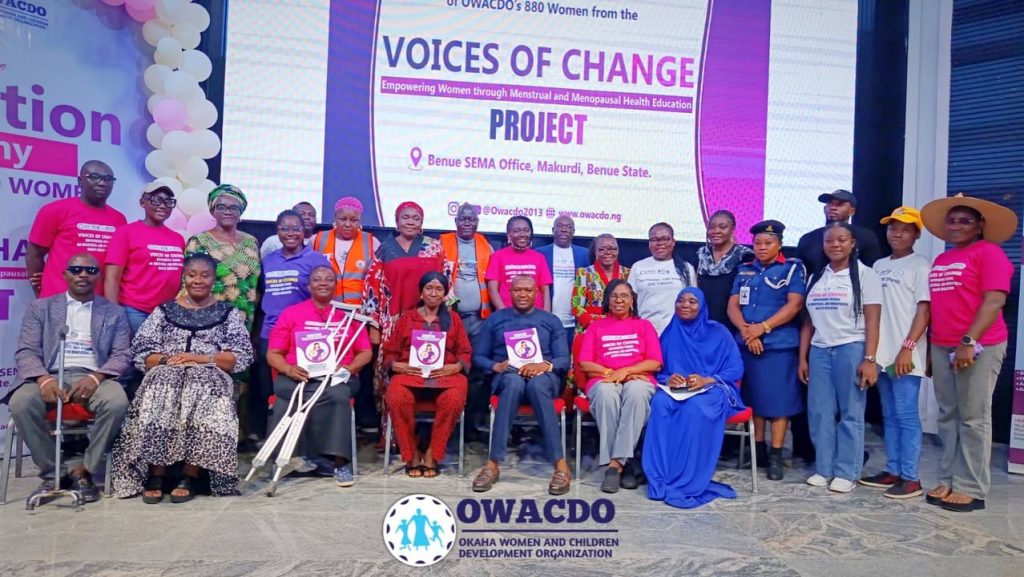
More than 880 women are now prepared to serve as menstrual and menopausal health advocates after completing months of education delivered by OWACDO with support from Fòs Feminista through the Sang Pour Sang Project.
Their graduation on 28 May 2026 was both a celebration and a public commitment. Participants had moved from private uncertainty and stigma to confident conversations about health, dignity and the support women and girls need at different stages of life.
A public walk for menstrual health and dignity
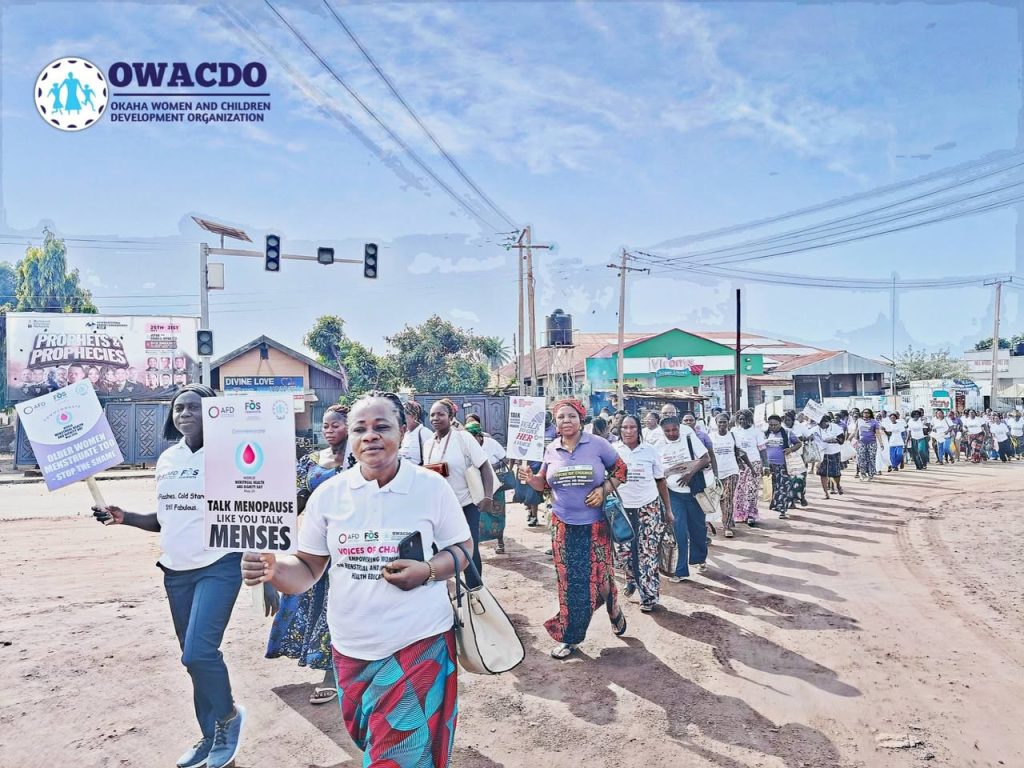
The celebration formed part of OWACDO’s commemoration of World Menstrual Health and Dignity Day. More than 800 participants joined a road walk from Tito Gate to the Benue State Emergency Management Agency office in Makurdi.
By taking the message into public space, the walk challenged the idea that menstruation should remain hidden. It called for accurate health information, safe menstrual-hygiene practices and environments in which girls and women can manage menstruation without shame, exclusion or interruption to daily life.
More than 800 participants walked through Makurdi to make menstrual health and dignity visible.
From learners to community advocates
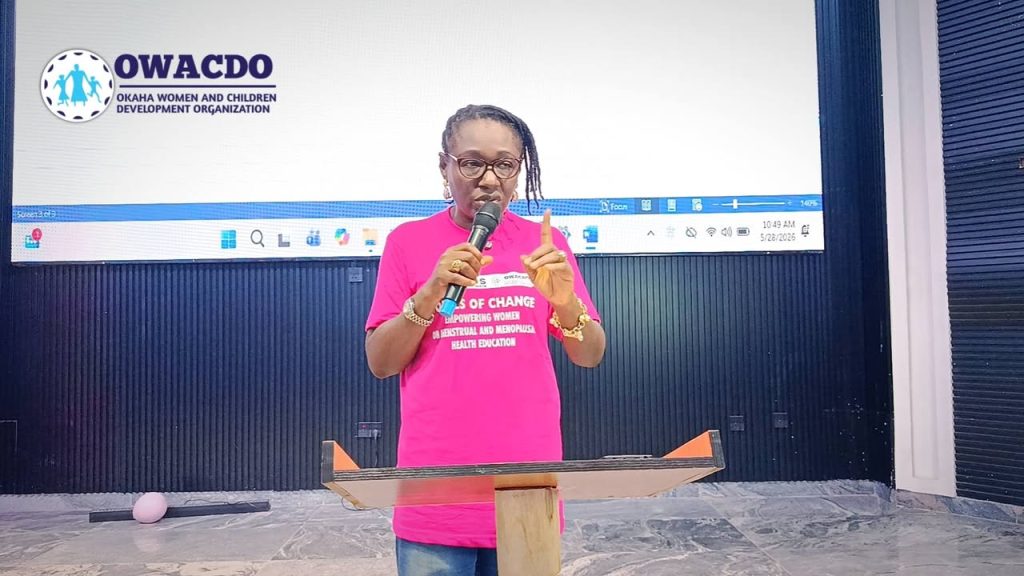
Graduation recognised the sustained learning behind the public event. The women had explored menstrual and menopausal health, challenged harmful myths and developed the confidence to discuss issues that are often surrounded by silence.
Completion did not mark the end of their role. Graduates were encouraged to carry reliable information into homes, schools, women’s groups and community spaces. Their lived experience and local relationships make them valuable advocates who can listen respectfully, correct misinformation and encourage others to seek appropriate support.
The graduates are equipped to continue health and dignity conversations within their communities.
Building a period-friendly future
The scale of participation showed that menstrual dignity is not a niche concern. It affects education, family wellbeing, confidence, participation and the ability of women and girls to live without discrimination.
OWACDO’s approach connects knowledge with collective action: women receive structured education, communities see the issue discussed publicly and graduates become voices for change. With continued support from Fòs Feminista, that model is helping turn a once-hidden topic into a shared responsibility.