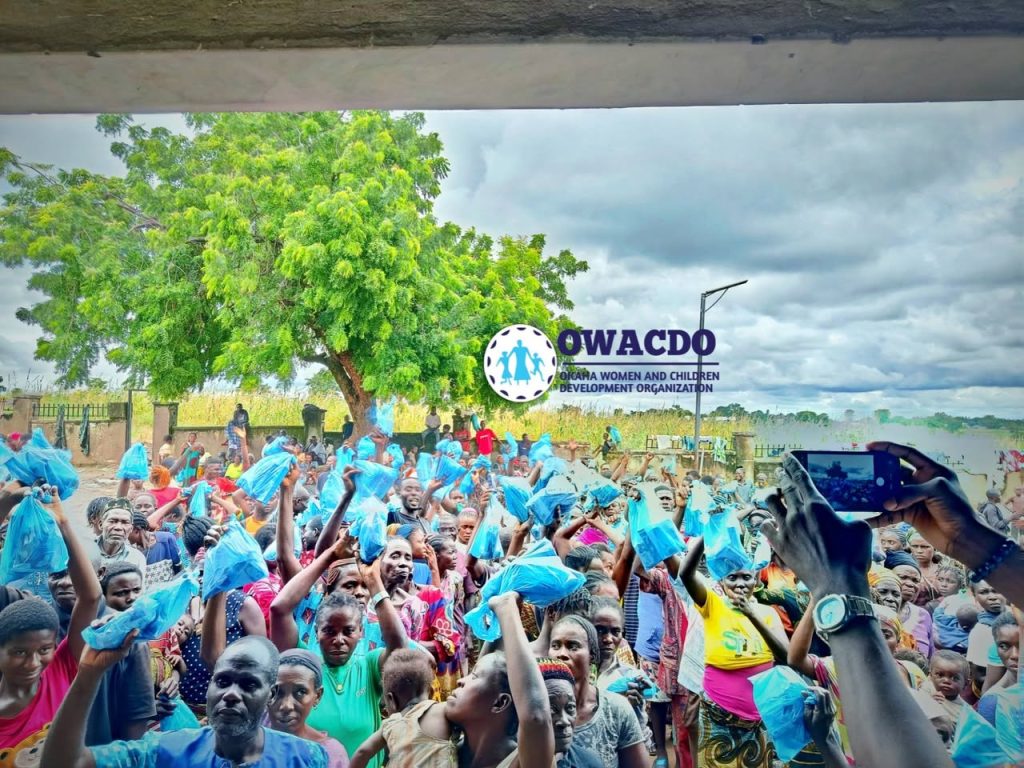
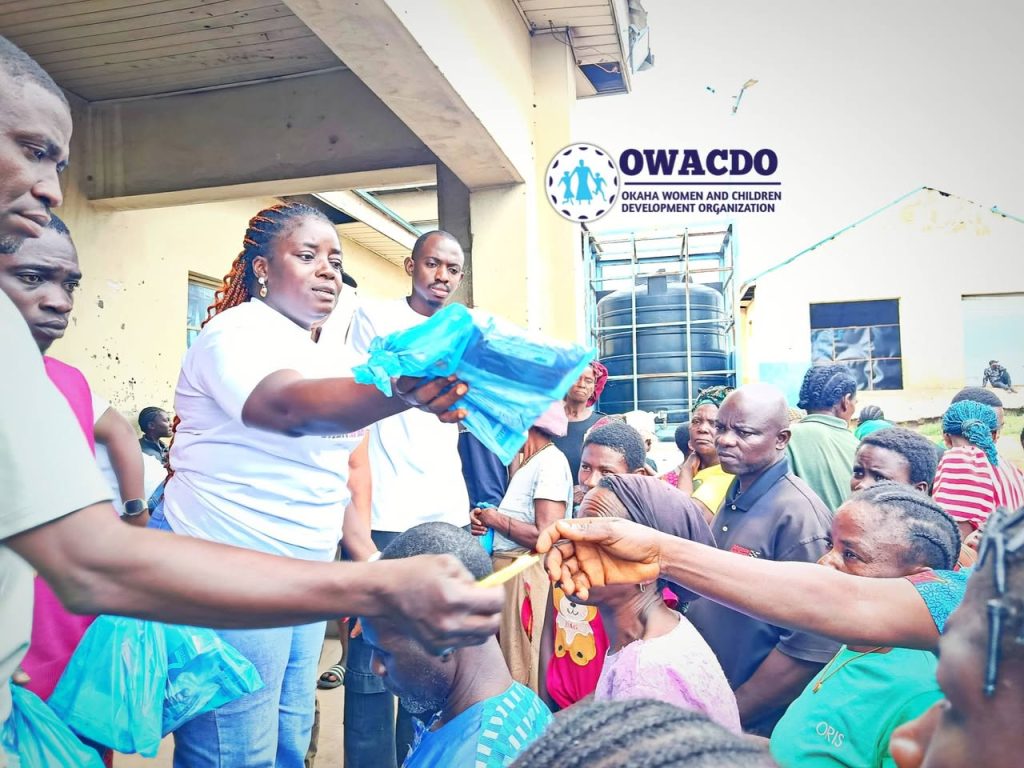
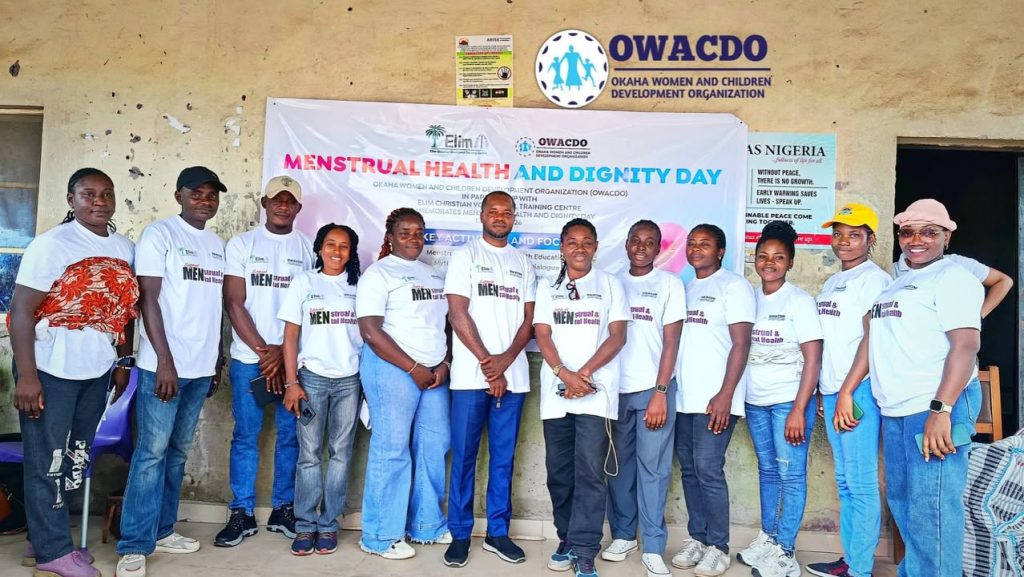
Menstrual health outreach at Abagena IDP Camp brought women, girls and men together on 17 July 2026 for practical learning, open conversation and the distribution of dignity kits.
OWACDO organised the activity in partnership with Elim Christian Vocational Training Centre as part of its Menstrual Health and Dignity Day 2026 commemoration. The outreach recognised that displaced communities need not only menstrual products, but also accurate information, supportive attitudes and safe opportunities to ask questions.
Practical learning for menstrual and reproductive health
Sessions covered menstrual health and hygiene, reproductive health and menopausal health. Facilitators addressed common myths and demonstrated the safe use and disposal of menstrual products, turning general awareness into practical knowledge participants could use immediately.
An interactive question-and-answer segment allowed community members to raise concerns in a respectful setting. This matters in environments where stigma can prevent women and girls from discussing pain, irregular bleeding, product access or other experiences that may require support.
Participants received practical guidance on menstrual products, hygiene and safe disposal.
Including men in health and dignity conversations
The outreach also addressed men’s engagement and men’s mental health. Inviting men into the discussion helps challenge ridicule and misinformation while encouraging them to support women and girls in households and the wider community.
Menstrual health is strengthened when responsibility is shared. Fathers, partners, brothers and community leaders can help ensure access to products, protect privacy, support school attendance and treat questions about menstruation or menopause with respect.
Dignity-kit distribution complemented the health education with immediate practical support.
Supporting dignity in a displacement setting
Displacement can make it harder to obtain private sanitation, menstrual products and trusted health information. Combining education with dignity kits helped respond to both information and material needs.
Through this partnership, OWACDO reinforced a simple principle: every woman and girl deserves to manage menstruation confidently and without stigma, including during displacement. Community-wide engagement also helps build an environment where that right is understood and supported by everyone.