Women leaders against human trafficking are essential to early prevention because they often hear concerns, notice changes and influence decisions within families, faith communities and traditional institutions.
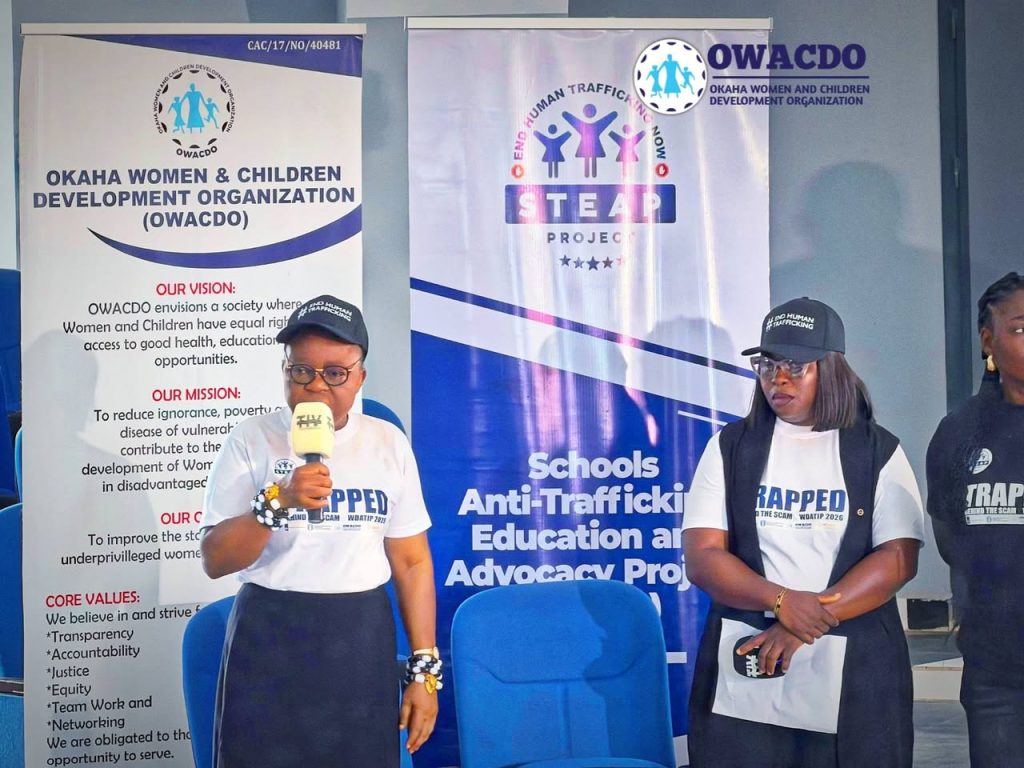
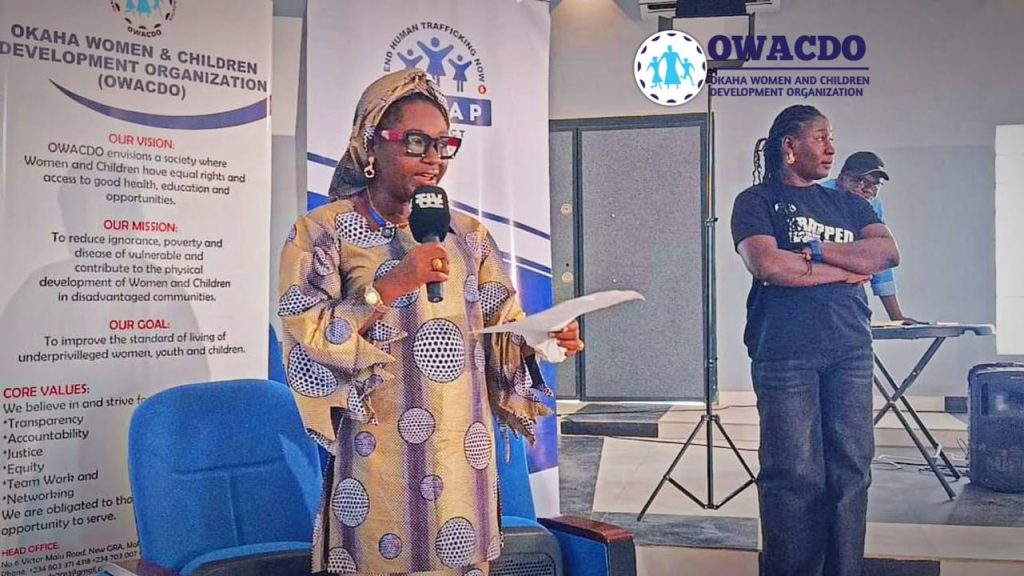
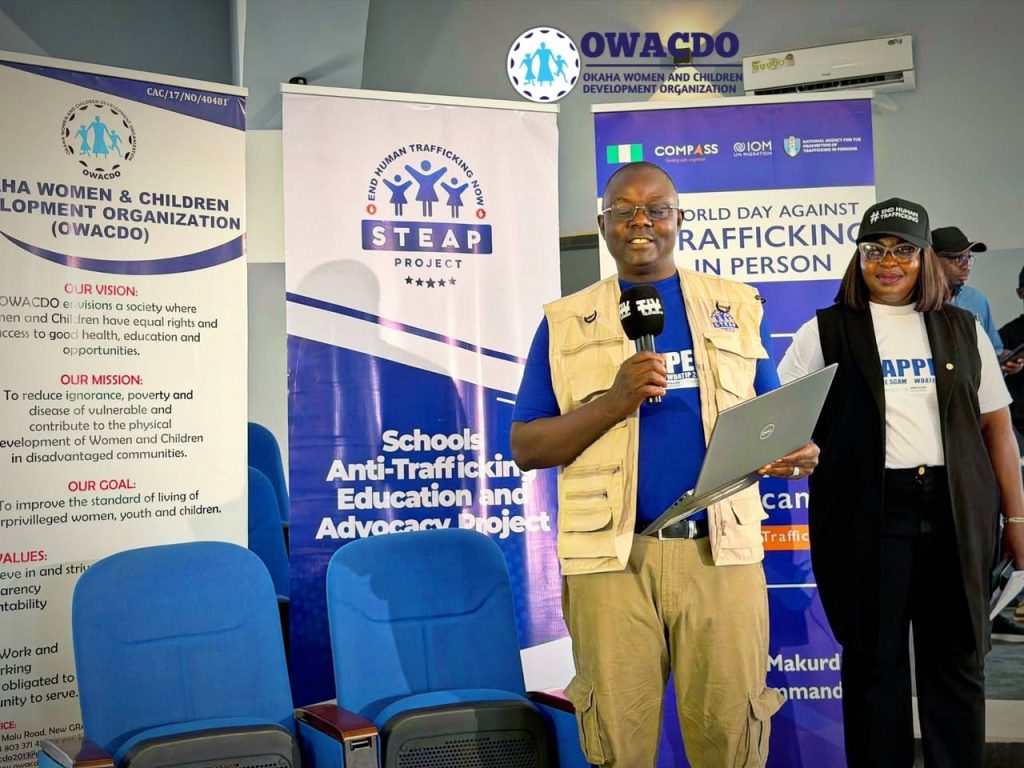
On 30 July 2026, OWACDO and the Benue Zonal Command of the National Agency for the Prohibition of Trafficking in Persons (NAPTIP) trained wives of traditional and religious leaders from across Benue State. The activity formed part of events marking the World Day Against Trafficking in Persons.
Equipping trusted voices to recognise trafficking risks
The training gave influential women leaders practical knowledge they can use to raise awareness and strengthen protection in their communities. Participants explored how traffickers exploit vulnerability, how deceptive promises of work, education or travel can place people at risk, and why suspicious offers should be verified before anyone commits money, documents or movement.
Because traditional and religious leaders are trusted sources of guidance, their wives are well positioned to extend prevention messages to women, young people and families who may not otherwise encounter formal anti-trafficking education.
Participants examine how trusted community networks can identify risks and share prevention information.
A shared commitment from government and community institutions
The event brought together the Queen Mother, wife of the Tor Tiv; wives of first- and second-class chiefs; wives of religious leaders; a representative of the Attorney General of Benue State; and other stakeholders. Their participation demonstrated that preventing trafficking requires coordinated action across families, justice institutions, traditional councils and faith communities.
The session was implemented under the School Anti-Trafficking Education and Advocacy Project (STEAP), funded by the Kingdom of the Netherlands and implemented by the International Centre for Migration Policy Development (ICMPD) in partnership with OWACDO.
OWACDO, NAPTIP and community leaders strengthened a common approach to trafficking prevention.
From training to practical community protection
The value of the training lies in what happens next. Participants can incorporate trafficking-prevention messages into women’s meetings, places of worship, community gatherings and private counselling. They can encourage families to check recruitment claims, watch for coercion or document seizure, and report concerns through appropriate authorities.
By investing in women who already hold trusted community roles, OWACDO is widening the network of informed advocates able to challenge deception and protect vulnerable people. The approach turns a commemorative day into sustained community action.