
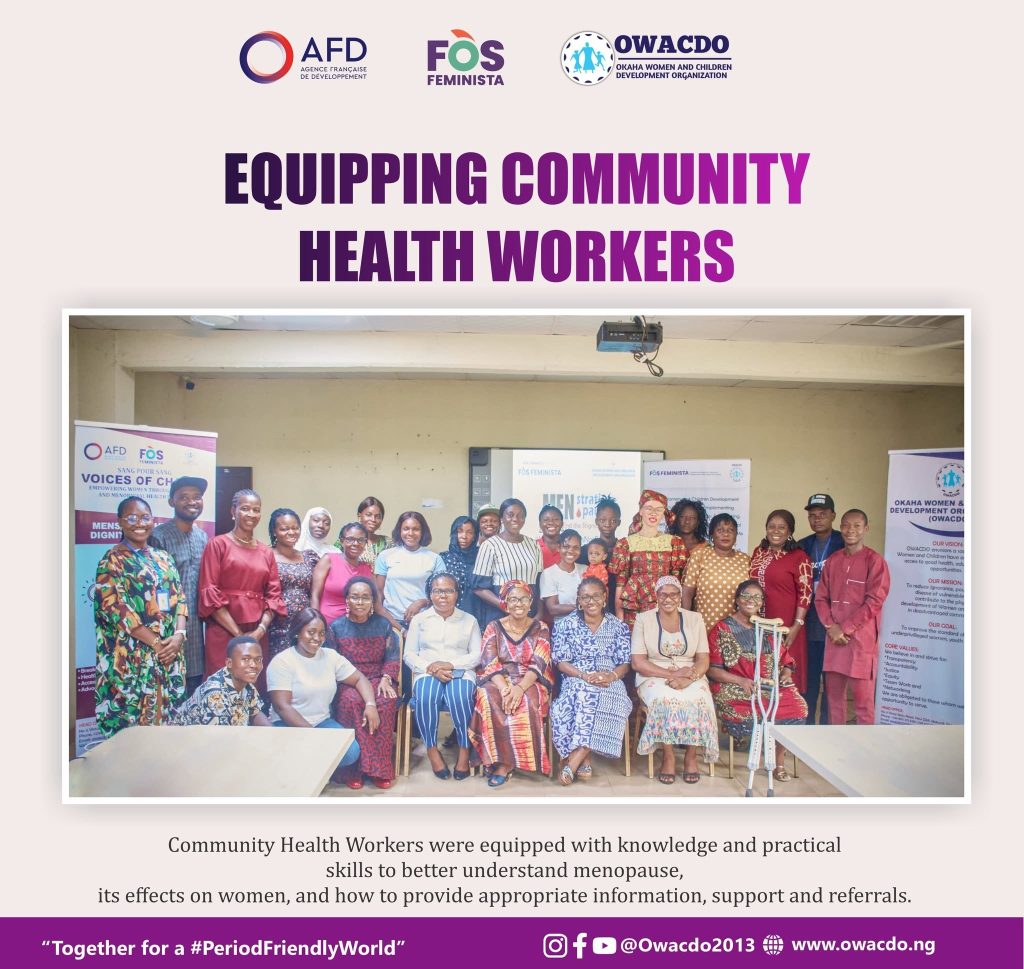
Community health workers’ training in Benue is helping OWACDO take accurate menstrual and menopausal health information beyond the training room and into the communities where women need it most.
Under the Voices of Change: Menstrual & Menopausal Health Education Campaign, the Okaha Women and Children Development Organisation (OWACDO) trained 20 community health workers from Makurdi and Guma Local Government Areas. The two-day programme took place on 23–24 May 2025 at the International Centre for Culture and Theatre (ICCT) in Makurdi, Benue State.
Building practical knowledge for women’s health
The training was designed to strengthen participants’ understanding of perimenopause and menopause while equipping them to support women experiencing these natural stages of life. It also prepared the health workers to share reliable information, respond sensitively to questions and challenge misconceptions within their communities.
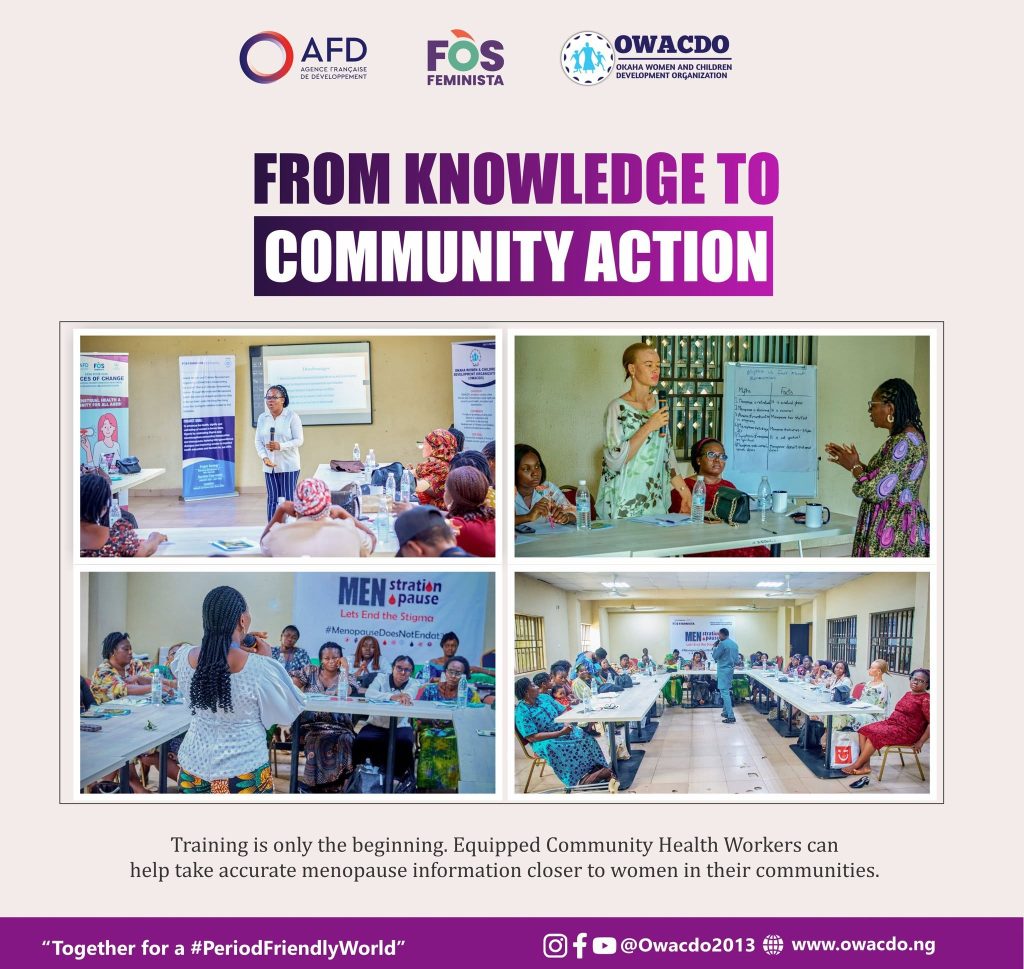
Participants examined menstrual health and hygiene, the menstrual cycle, perimenopause, menopause, sexually transmitted infections and the cultural beliefs that often shape how these subjects are discussed. Presentations were combined with group discussions, practical exercises, reflection and the sharing of lived experiences.
Why community health workers matter
Community health workers are often among the most accessible sources of health information at the local level. They understand community realities, communicate in familiar ways and can help women seek appropriate support without shame. Strengthening their knowledge therefore creates a pathway for accurate information to reach many more people than those present at a single workshop.
The approach is particularly important for menstrual and menopausal health. Silence, stigma and cultural myths can prevent women from asking questions or recognising when professional support may be helpful. Trained community workers can create safer conversations, correct misinformation and encourage women to make informed decisions about their health.
This programme builds on OWACDO’s wider work to improve menstrual and menopausal health awareness in Benue State. It complements initiatives such as the organisation’s Men’s Forum on menstruation and menopause in Makurdi and its work with women in Gamji community.
Responsible and sensitive community engagement
In addition to health topics, the training emphasised conflict sensitivity and the “Do No Harm” principle. These ideas are essential when discussing personal health experiences, social beliefs and stigma. Participants were encouraged to communicate respectfully, protect dignity and avoid actions that could expose individuals to embarrassment or harm.
Effective reporting was also covered so that community engagement can be documented, reviewed and improved. Good records help project teams understand whom they are reaching, what concerns are emerging and where additional support may be needed.
From training to community action
The 20 trained community health workers now serve as important links between the campaign and communities in Makurdi and Guma. Their role is to continue the conversation with women, families and other community members, helping to replace silence and harmful myths with knowledge and support.
The activity forms part of OWACDO’s Voices of Change campaign, supported through Fòs Feminista. Through local capacity building and community education, the campaign seeks to make menstrual and menopausal health easier to understand and safer to discuss.
For OWACDO, the training represents more than a two-day event. It is an investment in trusted community actors who can keep sharing accurate information, listening to women and promoting healthier responses long after the workshop has ended.